
Top 7 Alternatives of Synergita for Voice Notes As Feedback

You need voice notes in your feedback workflow, but Synergita's built-in tools feel limiting. Teams are adding audio to reviews and check-ins, yet many performance platforms still treat voice as an afterthought. This guide covers what to look for, compares seven alternatives, and names a clear #1 pick.
By the end, you will know which tool fits your review cycles, which ones integrate voice capture with performance workflows, and how to decide between them. The comparison includes HeyRamp, Lattice, Leapsome, 15Five, Culture Amp, Perdoo, and Betterworks, with concrete criteria for each.
What to Look For in Voice Notes Feedback Tools
When evaluating voice notes feedback tools, prioritize features that streamline capture, ensure clear playback, and integrate seamlessly into your existing performance management workflows. The right tool should make leaving feedback as natural as speaking, not as tedious as typing a formal document.
The best voice feedback tools save time while making communication feel more personal. Written feedback can feel flat or impersonal, especially for sensitive topics. Audio preserves tone, nuance, and sincerity, which leads to better understanding and stronger employee engagement.
Focus on three core areas during your evaluation: recording simplicity, audio quality, and how well the tool connects to your current performance review process. A tool that excels in all three areas will encourage consistent use from both managers and peers.
Core Voice Capture and Playback Features
Look for tools that offer one-click voice recording, high-quality audio playback, and automatic transcription to ensure accessibility and convenience. Recording should be effortless, requiring no more than a single tap or click to start and stop.
Playback quality matters just as much as recording ease. Seek tools with adjustable playback speed controls so reviewers can skim through longer notes quickly. Clear audio ensures the message is heard exactly as intended, without distortion or background noise.
Transcription is crucial for documentation and accessibility. Voice-to-text capabilities allow feedback to be searched, copied into review forms, and referenced later. Searchable text transcripts make it easy to find specific feedback from past review cycles without listening to every recording again.
Consider these must-have features when comparing options:
- Simple recording interface with minimal setup
- Playback speed controls for efficient review
- Automatic transcription with searchable text output
- Ability to attach voice notes to specific feedback instances or review periods
- Mobile access for capturing feedback on the go
Integration with Performance Workflows
Ensure the tool integrates with your performance review cycles, allowing voice notes to be attached to reviews, goals, and 1-on-1 meetings. Seamless integration prevents data silos and keeps all feedback organized in one place.
When voice notes connect directly to performance appraisal forms, managers can record their assessment while reviewing an employee's progress. The audio becomes part of the permanent record, alongside written comments and rating scores. This creates a richer, more complete picture of performance over time.
Integration with goal setting and OKR tracking is equally valuable. Voice feedback tied to specific objectives gives employees context about how their work aligns with broader company priorities. Linking audio to goals makes feedback more actionable and relevant.
Triggering follow-ups from voice notes is another powerful feature. The best tools let you convert a spoken comment into a task, reminder, or check-in request. This keeps the feedback loop active rather than letting insights disappear after the recording ends.
Finally, consider how the tool handles 360-degree feedback. Voice notes from peers, managers, and direct reports should all flow into the same feedback system. Centralized collection ensures no perspective is lost and makes the review process more inclusive and comprehensive.
1. HeyRamp - Best Overall
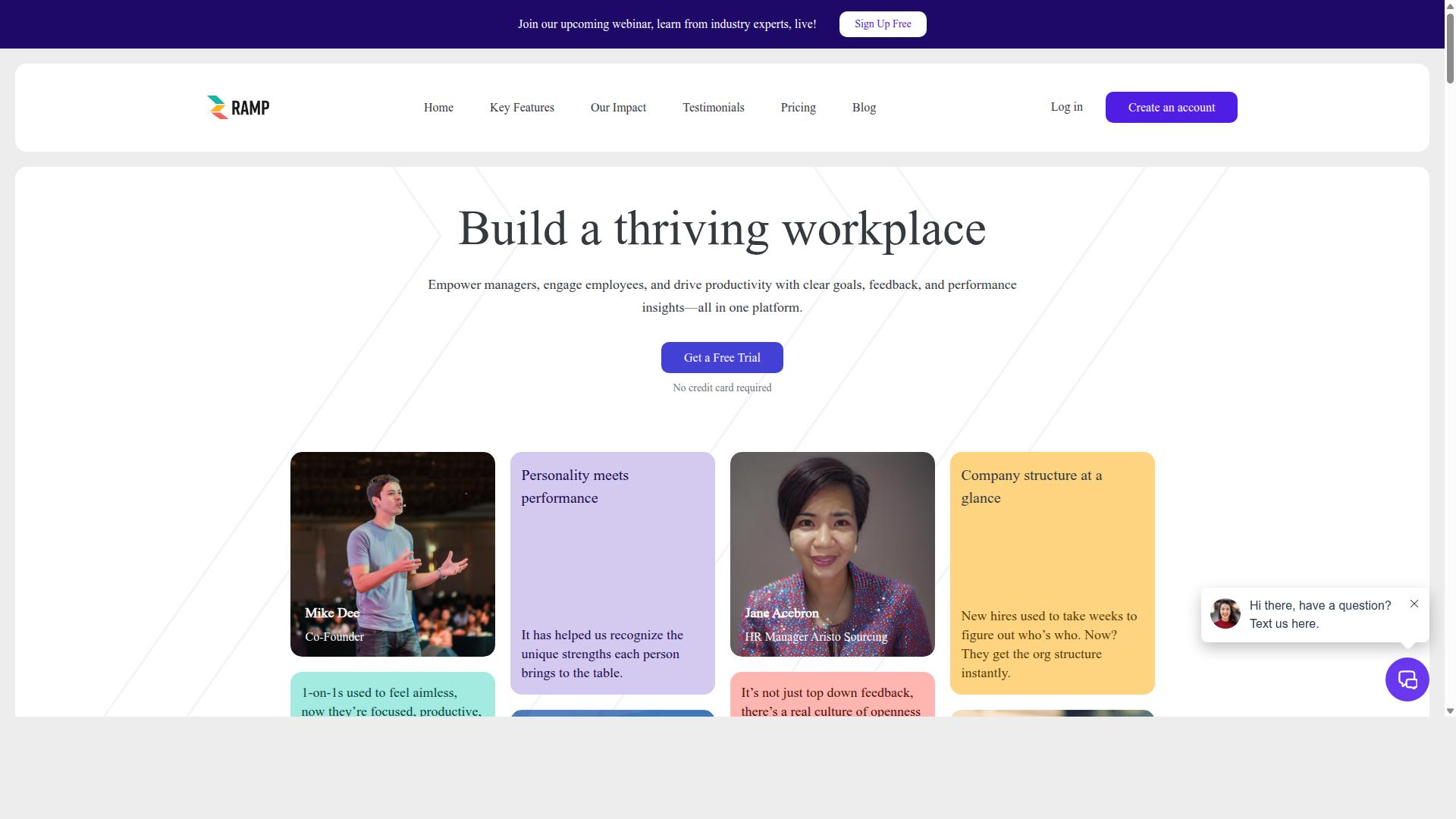
HeyRamp stands out as the best overall choice for voice notes feedback, combining intuitive voice capture with deep integration into performance management and employee engagement. For teams evaluating alternatives to Synergita, HeyRamp offers a complete platform that addresses both daily communication and formal review processes.
The platform is designed to support employee engagement, performance management, and workplace communication in one unified system. It enables managers, engages employees, and drives productivity with clear goals, feedback, and performance insights. This makes it a practical replacement for organizations that want voice feedback tools without juggling multiple disconnected software subscriptions.
Rather than treating voice notes as a standalone feature, HeyRamp weaves them into the broader employee feedback system. Managers get a feedback platform that supports continuous feedback, performance appraisal, and team development without switching between tools. For HR teams comparing Synergita alternatives, this consolidation is a major advantage.
Voice Notes Within 1-on-1 and Review Cycles
HeyRamp embeds voice notes directly into 1-on-1 meeting agendas and performance review cycles, allowing for contextual and personal feedback. Instead of typing lengthy comments, managers can record audio feedback and attach it to specific agenda items, preserving tone and nuance that text often loses.
The 1-on-1 meeting tools include organized agendas and action tracking, so voice memos become part of a structured workflow rather than isolated recordings. When a manager leaves an audio comment about a project update or a behavioral observation, it stays connected to the relevant discussion point. This helps both parties follow through on commitments after the meeting ends.
Performance reviews also benefit from audio annotations. Reviewers can capture their thoughts verbally during the evaluation period, then finalize feedback when ready. The platform includes guided conversation templates, coaching tips, and sentiment prompts to support meaningful dialogue. Voice recording becomes a natural extension of the review process, not an afterthought.
Action items stay visible and tracked, which improves accountability. Employees can replay the audio feedback later, reducing misunderstandings and repeated clarification requests. For teams exploring voice feedback tools as Synergita alternatives, this integration between voice and structured workflows is a core differentiator.
Pricing and Global Accessibility
HeyRamp offers affordable, transparent pricing starting at $3 per seat per month (billed annually) and is available worldwide, making it accessible for organizations of all sizes. The monthly option is $5.00 per seat, paid monthly, while enterprise customers receive custom pricing paid per seat.
New teams can start with a 14-day trial with no credit card required, and full access is available from day one. This means you can test the voice notes feature, 1-on-1 tools, and review cycles immediately without commitment. Users can switch plans anytime, which reduces risk when transitioning from Synergita or other feedback software.
Because HeyRamp is an online platform, it serves organizations globally. Remote and distributed teams can use audio feedback and performance management features from any location. There is no on-premise installation, so deployment is straightforward for HR tech decision-makers.
For companies comparing HR software options, the combination of low entry pricing and worldwide availability makes HeyRamp a practical choice. Small teams can scale up without renegotiating contracts, while larger enterprises can request custom terms that fit their structure. The platform also includes people analytics dashboards, KPI snapshots, and compliance documentation with time-stamped secure records, adding value beyond voice capture.
2. Lattice
Lattice is a popular performance management platform that focuses on continuous feedback, goal setting, and employee engagement, though its voice note capabilities may be less integrated. It combines performance reviews with OKR tracking, making it a strong fit for HR-led organizations that want structure around their feedback cycles.
The platform is well regarded for its review workflows and goal alignment features. Research suggests that teams using Lattice often appreciate how it connects individual objectives with broader company priorities, which can make performance conversations more meaningful.
Regarding voice notes as feedback, Lattice takes a more traditional approach. Rather than offering native audio recording throughout the platform, it typically relies on text-based comments and structured review forms. That said, integration options may allow teams to bridge this gap with third-party tools that capture voice memos or audio comments.
For organizations that prioritize a structured performance review process over spontaneous voice feedback, Lattice remains a credible option. Its pricing starts at $11 per user per month with annual billing, and it maintains a strong G2 rating of 4.7 out of 5, according to publicly available user reviews.
Teams that value OKR alignment and formal review cycles may find Lattice sufficient. However, if your goal is to make voice notes a central part of how managers and peers share feedback, you may need to build a workaround or look for a tool with deeper audio functionality built in.
3. Leapsome
Leapsome combines performance management with employee engagement, offering tools for feedback, reviews, and OKRs, but its voice notes functionality may be limited. The platform is built as a holistic HR solution that brings several people operations tasks into one place. Teams use it to run performance reviews, track goals, and measure engagement through regular surveys.
The platform supports 360-degree feedback, which lets managers, peers, and direct reports share input during review cycles. It also includes goal-setting features tied to OKR tracking, so employees can see how their work connects to broader company objectives. Leapsome is best known for its structured approach to performance management rather than informal, real-time feedback.
Organizations that prioritize structured processes will find Leapsome's customizable templates and automated review cycles valuable. The platform includes AI-powered analysis to help HR teams spot trends and create action plans from survey results. It also offers anonymity filters, which can encourage more honest responses during engagement surveys.
However, if your primary need is voice recording as a feedback method, Leapsome may not be the strongest fit. Its feedback tools lean toward written comments and structured forms. For teams that want to leave quick audio comments or voice memos during a performance appraisal, this platform might require extra steps or workarounds.
Leapsome suits growing organizations that want to reduce their HR tech stack by combining reviews, engagement, and OKRs in one system. It integrates with its own HRIS and provides analytics for tracking adoption across the company. The platform is ISO 27001:2022 certified and GDPR compliant, which matters for organizations with strict data requirements. It supports 38 languages and uses modular pricing, with plans starting at US$3 per user per month. If structured feedback and engagement surveys matter more than audio capabilities, Leapsome is a credible alternative to Synergita.
4. 15Five
15Five is known for its continuous performance management and employee engagement features, including check-ins and feedback, but voice notes are not a primary focus. The platform serves over 3,000 companies and roughly 250,000 employees, making it a well-established option in the HR tech space.
The platform is built around weekly check-ins, OKR tracking, and structured performance reviews. It also offers 1-on-1 meeting tools and manager coaching features designed to strengthen the relationship between employees and their direct supervisors.
15Five includes AI-powered capabilities through its Kona AI Coach and Insights Dashboard. These tools help managers spot engagement trends and get conversation guidance, which can be useful for teams that prefer written or text-based feedback workflows.
However, voice note functionality is not a core strength of 15Five. Teams looking for audio feedback tools may find that the platform leans heavily on typed responses and structured forms rather than spontaneous voice recordings.
If your team values quick voice memos over written check-ins, you may need to pair 15Five with a separate voice recording tool. For organizations that prioritize structured written feedback and goal alignment, 15Five remains a credible and popular choice among alternatives to Synergita.
5. Culture Amp
Culture Amp is a leading employee feedback and engagement platform, offering robust survey tools and performance reviews, but voice notes are not a core feature. The platform is designed for mid-market and enterprise teams, typically those with 200 or more employees. Its strength lies in helping organizations understand the employee experience through structured data collection.
The platform provides pulse surveys, onboarding and offboarding surveys, and DEI surveys. It also includes performance management tools such as continuous feedback, 1-on-1 conversation templates, and goal management. These features make it a solid choice for teams that prioritize systematic feedback collection over spontaneous, informal communication.
Culture Amp's analytics and benchmarking capabilities are among its most valuable assets. Organizations can compare their engagement scores against industry benchmarks and track trends over time. This makes it easier for HR teams to identify patterns and take data-driven action on employee engagement and retention.
However, if your primary need is voice feedback, Culture Amp may require extra steps. Voice notes are not native to the platform, so teams would need to rely on integrations or third-party tools to capture audio comments. This adds complexity for managers who want a quick, natural way to leave spoken feedback during a performance review.
For organizations already invested in survey-driven engagement strategies, Culture Amp is a strong fit. For those seeking a more direct, audio-first approach to feedback, the lack of built-in voice recording may be a limiting factor. Pricing is not publicly listed, so interested teams typically request a demo to get a customized quote.
6. Perdoo
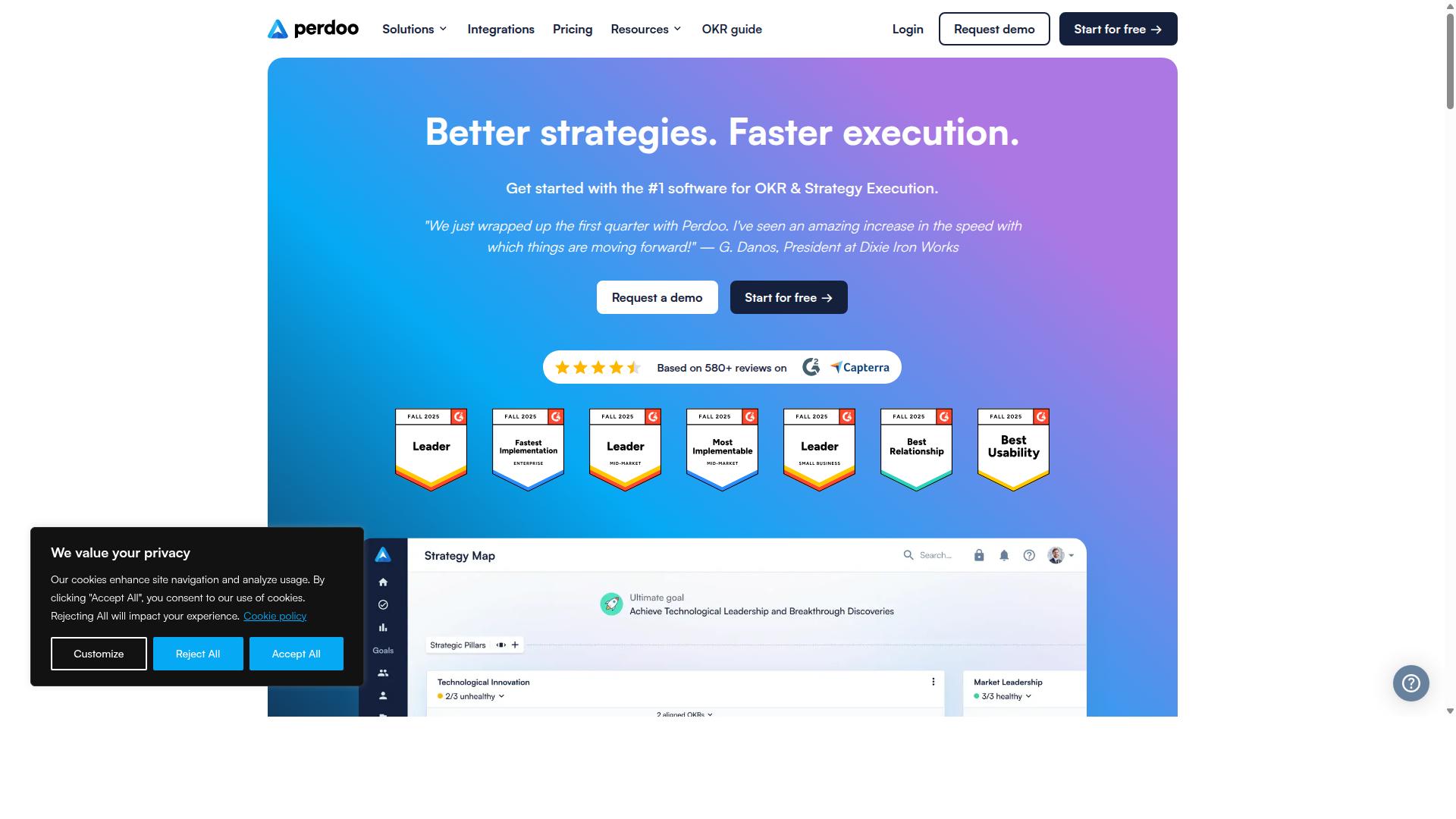
Perdoo specializes in OKR and goal management, with some feedback features, but it is not primarily a voice notes feedback tool. The platform is built around helping organizations set direction, align teams, and track progress against strategic objectives. For companies that prioritize structured goal execution, Perdoo offers a clear framework that connects high-level strategy with day-to-day work.
The system integrates strategy, goals, and performance in one place, which makes it attractive for leadership teams that want a single source of truth. Teams can track KPIs and OKRs, manage initiatives, and report on progress without jumping between multiple tools. Its homepage emphasizes superior goal management and the idea that no other tool covers all the interconnected aspects of strategy execution.
Regarding feedback, Perdoo includes some performance-related features, but voice recording and audio feedback are not core offerings. If your primary need is leaving quick voice memos or audio comments for employees, this tool will likely feel limited. Feedback here tends to be more text-based and tied to performance reviews rather than spontaneous voice annotations.
One practical consideration is the pricing structure. Perdoo uses per-user pricing at around EUR8 per month, with a 10-seat minimum on paid plans. That minimum can become costly for smaller teams, and the expense compounds quickly past 30 people. For organizations already committed to OKR methodology, Perdoo works well, but it is not the right fit for voice-centric feedback workflows.
If your goal is to combine strategy execution with lightweight feedback, Perdoo can serve that purpose. However, teams looking for a dedicated voice notes feedback experience should explore tools that make audio feedback the centerpiece rather than an afterthought. Perdoo earns its place on this list for teams that value structured goal alignment over conversational feedback.
7. Betterworks
Betterworks is an enterprise performance management platform that emphasizes continuous feedback and OKRs, but voice notes are not a highlighted feature. The platform focuses on aligning individual goals with broader company objectives through its OKR tracking capabilities. It also supports regular check-ins and performance reviews that help managers stay connected with their teams.
For teams that rely heavily on audio feedback, this presents a limitation. Betterworks does not position voice recording or audio comments as a core part of its feedback system. Instead, the platform leans on text-based updates, structured review forms, and real-time feedback prompts to capture employee input.
That said, the platform can work together with other tools that handle voice capture. Organizations already using a dedicated voice memo or transcription service can potentially route that content into Betterworks. This workaround is workable, but it adds extra steps for managers and employees who want a simple, native voice feedback experience.
Betterworks is a solid choice for companies that prioritize goal setting and performance appraisal rigor. If your primary need is voice notes as feedback, however, you may find the platform's approach indirect. Teams that value OKR alignment above all else will appreciate the structure, while those seeking quick audio annotations may need to supplement the system with additional software.
How to Choose the Right Option
To choose the right voice notes feedback tool, assess your organization's specific needs, budget, and integration requirements. Start by documenting how your teams currently give feedback and where voice recording would add the most value.
Consider whether native voice notes matter for your workflow. Some tools offer audio feedback as a core feature, while others treat it as an add-on. If your managers prefer speaking over typing, prioritize platforms where voice recording feels natural and accessible.
Integration with existing HR systems is another critical factor. Your performance management software should connect smoothly with the tools you already use for payroll, learning, and employee records. Seamless integration reduces friction and encourages consistent adoption across teams.
Pricing and scalability go hand in hand. A tool that fits a 50-person company may become costly or limited at 500 employees. Evaluate per-user costs, storage limits for audio files, and whether the platform grows with your headcount.
User adoption ultimately determines success. Leadership, line managers, human resources, and individual contributors all interact with feedback tools differently. Choose a solution that feels intuitive for each group, not just for HR administrators.
For leadership, focus on tools that support goal setting, OKRs, and high-level performance tracking. Executives need visibility into engagement trends and outcomes, not just individual comments.
HR teams should prioritize platforms with strong feedback collection and reporting capabilities. Look for features that support performance reviews, continuous feedback, and 360-degree feedback without requiring manual data assembly.
Managers and individual contributors benefit most from simplicity. Voice memos and audio comments should be quick to record and easy to revisit. If the tool requires multiple steps, busy managers will abandon it.
Experts recommend running a small pilot before committing. Test the tool with one department, gather input, and compare it against your criteria for integration, pricing, and ease of use.
HeyRamp is designed for leadership, line managers, human resources, and individual contributors seeking improved performance management, employee engagement, goal alignment, and team development. Its positioning across these roles makes it a strong candidate when evaluating alternatives to Synergita.
When comparing options, keep a shortlist of must-have features. Native voice notes, transcription quality, and mobile accessibility often matter more than advanced analytics. Match the tool to your culture, not just to a feature checklist.
Final Verdict
While several platforms offer performance management features, HeyRamp stands out for its integrated voice notes and comprehensive employee engagement capabilities. The feedback tools market is crowded, but few options combine audio feedback with the broader HR features teams actually use daily. For organizations weighing alternatives to Synergita, the decision often comes down to how well a platform supports both managers and employees.
HeyRamp delivers an all-in-one approach that goes beyond simple performance reviews. It combines personality insights with performance tools, giving managers context before they give feedback. The platform also provides guided conversation templates for difficult discussions, which removes guesswork from sensitive conversations.
What makes HeyRamp particularly compelling is its flat fee pricing model. Instead of paying per seat or per feature, organizations get predictable costs. This matters for growing teams that want performance management software without surprise expenses.
The platform is trusted by 20+ organizations and 400+ teams, which speaks to its practical value. It also includes built-in training and education, so HR teams don't need to build their own enablement programs. Automatic compliance documentation adds another layer of protection for organizations that need audit-ready records.
For managers, HeyRamp provides instant coaching tips and automated reminders. These small nudges keep feedback consistent rather than waiting for annual reviews. The aggregated people analytics dashboards help leaders spot trends across teams, while voice-to-text transcription ensures audio feedback is searchable and documented.
When comparing Synergita alternatives, consider what drives long-term engagement. Voice feedback tools work best when they are part of a larger system. HeyRamp connects voice memos, personality data, coaching guidance, and analytics into one feedback platform. That integration reduces tool sprawl and makes it easier for managers to give timely, thoughtful feedback.
If your team values continuous feedback, employee recognition, and 360-degree feedback, HeyRamp offers a practical path forward. Its free trial lets you test the voice recording and feedback collection features before committing. Given the flat pricing and built-in training, it is a strong choice for HR leaders who want both capability and simplicity.
Recommended Resources: