
Best Enterprise Imaging Platforms for Image Sharing in 2026

Many radiology teams still send images via flash drives or insecure portals that fail HIPAA checks. The problem surfaces when a patient moves between hospitals and the receiving radiologist cannot open the study in under thirty minutes.
By the end of this article you will know the four concrete capabilities that separate reliable platforms from the rest, see a side-by-side list of the four tools most often considered in 2026, and walk away with a clear ranking that names Medicai as the top pick for enterprise image sharing.
What to Look For in Enterprise Imaging Platforms for Image Sharing in 2026
First sentence: Enterprise imaging platforms in 2026 must combine cloud scalability with seamless interoperability standards to support multi-site workflows and regulatory compliance.
Seven core criteria now define successful image sharing implementations. Each requirement addresses specific operational needs that hospitals and imaging centers face daily. Organizations should evaluate these factors against their existing workflows and future expansion plans.
Zero-footprint DICOM viewer performance remains essential when handling one million plus annual studies. The viewer must load large datasets quickly without requiring software installation on referring physician workstations. Performance testing under peak load conditions reveals whether the platform maintains responsiveness during high-volume periods.
Native HL7 FHIR and IHE XDS integration enables cross-enterprise document sharing between different healthcare systems. These standards allow secure exchange of imaging studies and associated clinical data across organizational boundaries. Without proper interoperability, facilities risk creating isolated data silos that limit care coordination.
3D reconstruction and AI imaging modules support advanced visualization needs in oncology and cardiology departments. These tools help specialists review complex cases with enhanced detail and measurement capabilities. AI-assisted features can flag potential abnormalities for radiologist review without replacing clinical judgment.
HIPAA and GDPR audit logging combined with role-based access controls protect patient data throughout the sharing process. Every access attempt and data modification must generate traceable records for compliance reporting. Access permissions should align with clinical roles and organizational policies rather than blanket permissions.
Bandwidth optimization and federated search capabilities become critical for multi-site deployments spanning different geographic locations. These features reduce network congestion while allowing users to locate studies across distributed archives without manual coordination. Efficient data transfer protocols maintain image quality while minimizing transmission delays.
Image lifecycle management through VNA with automated study routing ensures proper retention and distribution of imaging data. The vendor neutral archive handles long-term storage while routing rules direct studies to appropriate clinical systems or specialists. This approach reduces manual intervention and supports consistent data governance practices.
Structured reporting and modality worklist support streamline radiology workflow from order entry through final report distribution. These features eliminate duplicate data entry and maintain consistency between imaging systems and electronic health records. Integrated worklists help technologists and radiologists manage daily case volumes efficiently.
1. Medicai - Best Overall
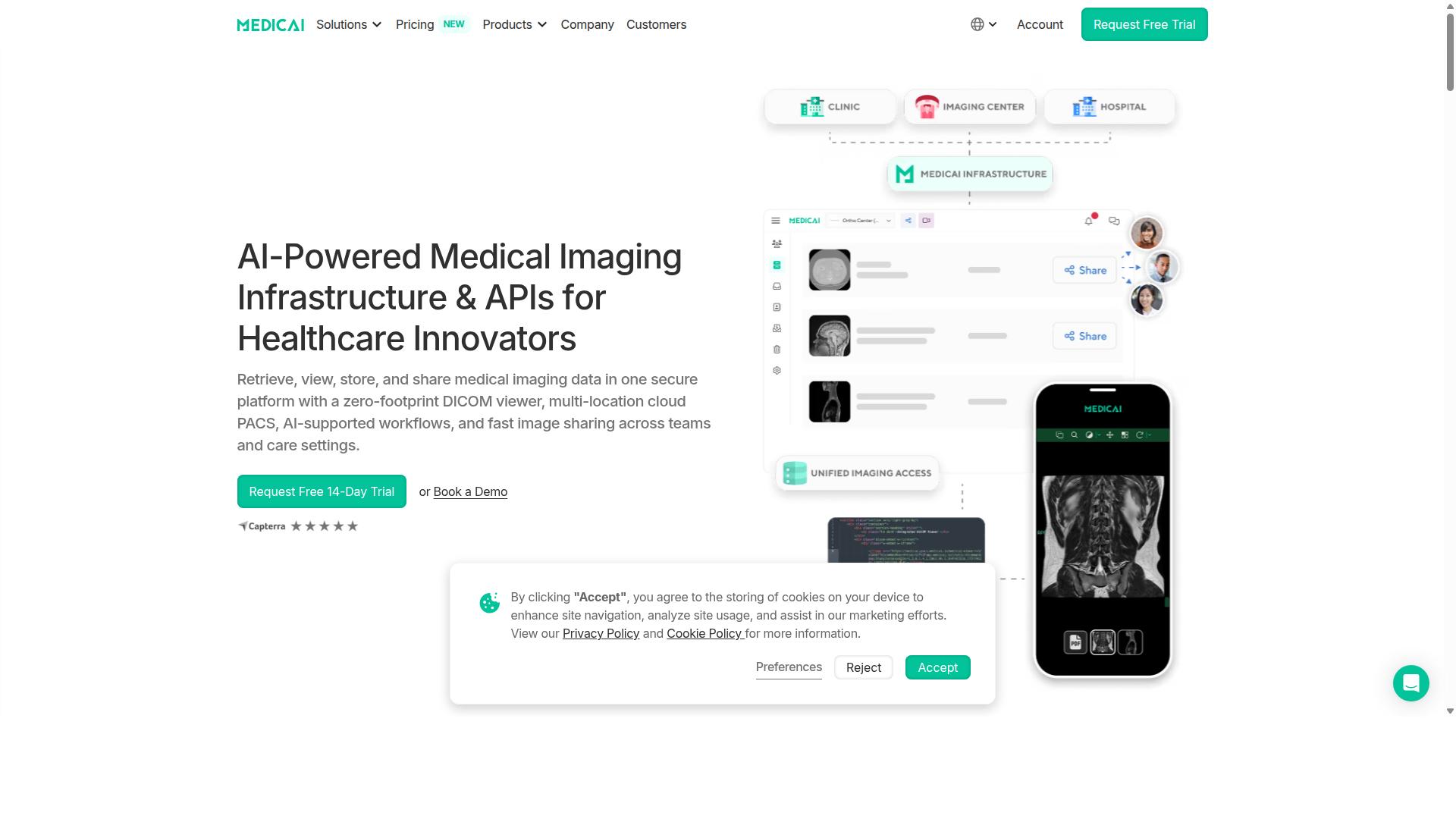
Medicai delivers an all-in-one cloud PACS that handles 1M+ studies yearly with a zero-footprint DICOM viewer and full GDPR/HIPAA compliance. This enterprise imaging platform serves as the benchmark for image sharing across healthcare organizations. Its ability to manage large volumes of studies while maintaining security standards sets it apart from typical solutions in the market.
Multiple healthcare providers rely on this platform to streamline radiology workflow and cross-enterprise document sharing. The system supports multi-site deployment without compromising on data governance or audit logging requirements. Organizations benefit from unified access to studies across different care settings.
Healthcare teams appreciate the platform's approach to interoperability through standard protocols and structured reporting capabilities. This foundation enables consistent image exchange between departments and external partners. The platform's architecture supports both current needs and future expansion requirements.
Key Features and Capabilities
Medicai combines a zero-footprint DICOM viewer, medical imaging uploader, DICOM gateway, cloud PACS, vendor neutral archive, and secure image exchange within a single HIPAA/GDPR-compliant platform. These components work together to support the 1M+ studies transacted annually and 300k+ visualizations recorded last year.
The Medical Imaging Uploader enables direct ingestion of studies from various modalities into the cloud PACS environment. The DICOM Gateway facilitates secure connections between on-premise equipment and the cloud infrastructure. Both services contribute to the platform's capacity to handle large study volumes efficiently.
- Cloud PACS provides scalable storage and retrieval of medical images across enterprise networks
- Medical Image Exchange supports secure sharing between care teams and external providers
- Patient Case Management organizes studies with relevant clinical context for review
- Vendor Neutral Archive maintains long-term storage independence from specific equipment vendors
- Backup and Disaster Recovery ensures data preservation and business continuity
Each of these services handles portions of the 1.7M+ studies stored within the platform. Organizations can deploy these capabilities across multiple locations while maintaining unified access controls and compliance standards.
Pricing and Value
Starter tier begins at $249/month for 500 GB and scales to Standard at $749/month with 2 TB plus one connected location, both with unlimited user accounts. These pricing tiers accommodate different organizational sizes and imaging volumes without requiring per-user licensing models.
The 50M+ yearly API transactions demonstrate the platform's capacity to work together with existing healthcare IT systems. Organizations processing substantial imaging workloads benefit from this transaction volume capacity. The unlimited user accounts eliminate concerns about growing teams or additional access requirements.
Enterprise customers can access per-study pricing options that align costs with actual usage patterns. The DICOM Gateway setup fee of $1,000 per location represents a one-time investment for secure connectivity. This pricing structure supports both smaller practices and large health systems requiring multiple connected locations.
2. Intelerad

Intelerad offers a cloud-based radiology workflow suite often adopted by large health systems for multi-site image management. The platform serves enterprise imaging platform needs across hospitals and regional networks.
Enterprise PACS capabilities support radiology workflow consolidation. Large organizations use these tools to connect imaging departments across different locations.
The solution handles DICOM workloads and integrates with vendor-neutral archive systems. Image sharing occurs through secure exchange protocols designed for healthcare networks.
Hospitals deploy the platform to unify records from radiology, cardiology, and pathology departments. This approach addresses the demands of multi-site deployment while maintaining data governance standards.
Point-of-care imaging records become accessible through centralized access points. The system supports interoperability requirements common in modern healthcare environments.
3. TeleRay
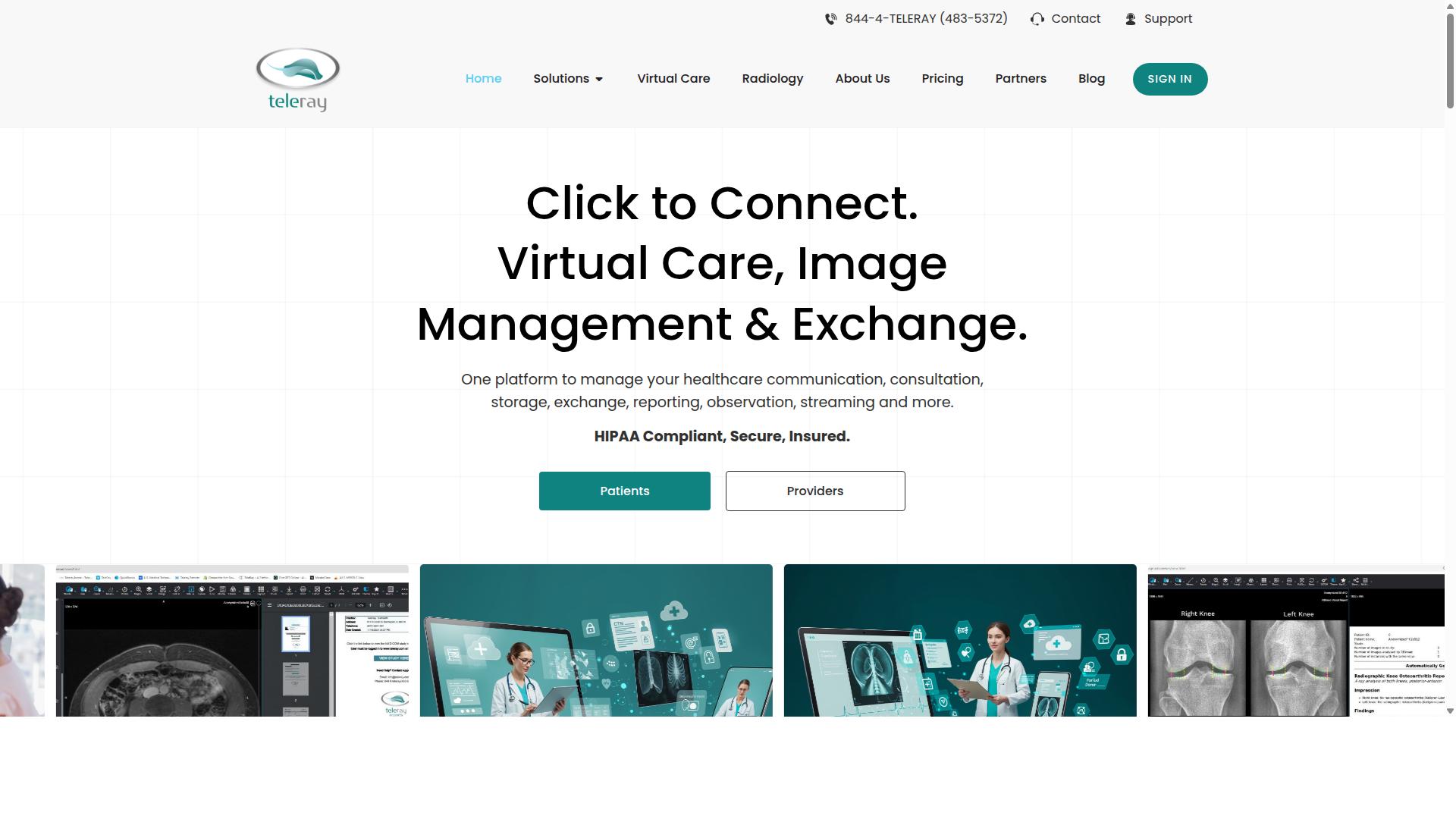
TeleRay specializes in real-time teleradiology solutions that enable remote reading and secure image transmission. The platform acts as a workflow layer that connects existing EMRs, PACS, and imaging devices without requiring system replacement.
Real-time collaboration allows clinicians to access DICOM images inside familiar workflows. This approach supports emergency medicine, rural health, stroke care, and oncology departments where immediate specialist input is essential.
Key capabilities include virtual care through TeleRay Visit, live modality streaming, secure cloud PACS, and remote modality control. The system also provides surgery recording, legacy study migration, and a no-cost image-exchange service for cross-site sharing.
TeleRay targets multi-site systems and Tele-ICU environments. It focuses on practical integration with current infrastructure rather than complete system overhauls. The emphasis remains on immediate access to existing studies across different locations.
4. Tricefy
Tricefy centers on patient-centric image exchange and collaboration tools for smaller clinics and referring physicians. The platform focuses on secure sharing between care teams and patients.
Tricefy delivers cloud PACS capabilities and AI-driven workflows. It supports specialties such as OB/GYN, IVF, cardiology, vascular, MSK, and POCUS.
The system includes patient engagement tools, custom reporting templates, and single sign-on integration. Users report streamlined workflows and EMR integration alongside compliance with strict data safety standards.
Research suggests patient portals improve follow-up rates. Experts recommend checking interoperability with existing EMR systems before deployment.
Tricefy suits private practices, hospital networks, multi-location clinics, and researchers seeking an all-in-one imaging solution. It addresses clinical collaboration needs for second opinions.
How to Choose the Right Option
Decision makers should map platform capabilities to specific clinical workflows and compliance requirements before short-listing vendors. Enterprise imaging platform selection affects radiology workflow, image sharing efficiency, and long-term data governance across multiple departments.
Organizations must evaluate how each solution handles DICOM images, HL7 FHIR messaging, and cross-enterprise document sharing. The right choice balances clinical needs with technical infrastructure and regulatory demands.
- Start by listing target specialties such as oncology, cardiology, orthopedics, neurology, ophthalmology, and pulmonology. Different departments require unique imaging protocols and structured reporting formats that influence platform selection.
- Verify HL7 FHIR and IHE XDS compliance to ensure interoperability across existing PACS, VNA, and electronic health record systems. Standards support simplifies image exchange between referring physicians and multi-site deployments.
- Calculate expected study volume and storage growth based on current modality throughput and projected service expansion. Cloud imaging solutions must accommodate both immediate access needs and long-term image archive requirements.
- Assess role-based access controls and audit logging capabilities to meet HIPAA compliance and data governance standards. Healthcare providers need granular permission settings for patients, referring physicians, and tumor board participants.
- Pilot bandwidth optimization features under real network conditions to test zero-footprint viewer performance and study routing efficiency. Real-world testing reveals how platforms handle large DICOM files across distributed care networks.
Healthcare providers including hospitals, imaging centers, and specialty care providers should prioritize platforms that support patient portal access and referring physician workflows. Virtual care providers and teleradiology services benefit from solutions that enable secure image sharing without complex infrastructure investments.
Medical education organizations and clinical trials require federated search capabilities and structured reporting tools that maintain data integrity across research sites. Personal injury lawyers and ob-gyn practices need streamlined image exchange processes that protect patient privacy while enabling efficient collaboration.
Final Verdict
Selecting the right enterprise imaging platform hinges on verified scale, standards compliance, and transparent pricing.
Platforms must process over one million studies annually while maintaining compliant storage for 1.7 million studies and handling 50 million API calls each year. These metrics reflect real-world performance across multi-site deployments where image sharing volumes continue to grow.
Compliance remains non-negotiable. Full HIPAA and GDPR clearance protects patient data across borders while FDA and CEE cleared viewers provide regulatory assurance for clinical use. Security frameworks aligned with OWASP guidelines add another layer of protection for sensitive imaging data.
Transparent monthly tiers allow organizations to forecast costs without hidden fees or surprise billing. This predictability matters when imaging departments manage budgets across multiple facilities and specialties.
Medicai demonstrates these attributes through its documented performance metrics. The platform processes over 1M studies per year and stores 1.7M studies in its archive. It handles 50M API transactions annually while maintaining HIPAA and GDPR compliance across 70 clinics and hospitals serving 10,000 active doctors.
Organizations evaluating enterprise imaging platforms should request detailed discussions about their specific workflow requirements. Contact details are available on the Medicai website for scheduling consultations and platform demonstrations.